Backrooms Explained: Meaning, Origins, Levels, Creatures, and the Internet Horror Phenomenon
Introduction
The backrooms explained is one of the internet’s most fascinating horror concepts, combining mysterious spaces, psychological fear, and unsettling environments. It describes a strange, seemingly endless maze of yellow rooms, buzzing fluorescent lights, stained carpets, and empty hallways that appear familiar but feel deeply unnatural. The idea became popular through online horror communities, videos, games, and fan-created stories.
For people searching for backrooms explained, understanding the concept means exploring its origins, fictional levels, mysterious creatures, and the reasons it has become such a popular part of modern internet horror. Although the backrooms explained is not a real place, its atmosphere feels believable enough to make people imagine what it would be like to become trapped inside it.
What Are the Backrooms?
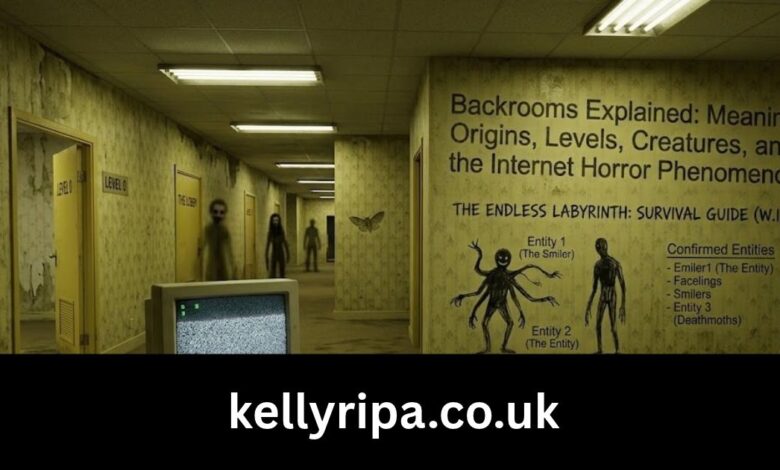
The backrooms explained is a fictional horror setting that portrays an enormous, confusing space existing beyond the familiar world. Its most recognizable version features empty office-like rooms covered in faded yellow wallpaper, damp carpeting, and harsh fluorescent lighting. The rooms seem to continue forever, with no clear exits, windows, or recognizable landmarks.
The central idea is that someone might accidentally leave normal reality and enter this strange environment. In internet horror stories, this event is often described as accidentally slipping out of reality, sometimes called no-clipping. Once inside, the person may struggle to find a way out while encountering increasingly strange surroundings.
Unlike traditional horror stories that depend on haunted houses or visible monsters, the backrooms explained often creates fear through isolation, uncertainty, and the possibility that something is hiding just beyond the next corner.
The backrooms explained has no single official storyline. Different creators have developed their own interpretations, meaning the setting can change considerably between games, videos, and written stories.
The Origin of the Backrooms
The backrooms explained originated as an internet horror concept that spread through online imageboards and social media.
The Original Image and Creepypasta
The idea became widely known in May 2019, when an unsettling photograph of an empty, yellowish interior was shared on 4chan’s paranormal-themed imageboard. The image showed a strange room with fluorescent lighting, patterned walls, and carpeting that made the environment look both ordinary and disturbing.
A user connected the image to a fictional description of places people might enter after accidentally slipping out of reality. The accompanying text described an endless collection of empty rooms where something dangerous might be wandering.
The contrast between the ordinary appearance of the room and the terrifying idea behind it helped the concept gain attention. The image looked like somewhere a person might encounter in an office building, hotel, or abandoned commercial property, yet its emptiness suggested that something was wrong.
How the Backrooms Became an Internet Trend
After its initial appearance, the backrooms explained spread across Reddit, YouTube, TikTok, and online horror communities. Fans began creating stories, illustrations, animations, and games based on the original concept.
Over time, creators expanded the setting beyond the familiar yellow rooms. They introduced different environments, survival challenges, fictional organizations, mysterious entities, and elaborate explanations of how the backrooms explained supposedly functioned.
This collaborative approach allowed the concept to develop into a large fictional universe rather than remaining a single internet horror story.
What Is Level 0 in the Backrooms?
The classic starting point of the Backrooms universe
Level 0 is generally considered the original and most recognizable part of the Backrooms. It represents the unsettling yellow interior that first made the concept famous.
Its appearance is deliberately repetitive. Rooms connect to corridors without an obvious pattern, fluorescent lights produce a constant buzzing sound, and the damp carpet creates an uncomfortable atmosphere.
Main Features of Level 0
- Endless rooms: The layout appears to continue without a clear boundary.
- Yellow walls: Faded wallpaper gives the environment its distinctive appearance.
- Buzzing lights: Fluorescent lighting creates a persistent background noise.
- Damp carpeting: The floors often appear stained or wet.
- Lack of people: The environment feels abandoned despite resembling an occupied building.
- Confusing navigation: Rooms seem similar, making it difficult to remember where a person has been.
In many versions of the lore, Level 0 is relatively empty compared with other levels. Its greatest danger is the combination of isolation, disorientation, and the uncertainty of what might happen next.
However, the details vary between interpretations. Some stories portray Level 0 as almost entirely devoid of creatures, while others introduce threats or unusual events.
Understanding Backrooms Levels
One reason the backrooms explained became so popular is the development of a level-based structure. Instead of a single endless building, many fan-created versions describe numerous environments, each with its own appearance, rules, and dangers.
These levels are not part of one universally accepted canon. They come from different community projects and fictional interpretations.
Level 1: The Habitable Zone
Level 1 is commonly depicted as a darker, industrial environment containing concrete floors, storage areas, pipes, and large warehouse-like rooms. Unlike Level 0, it may contain supplies such as water, food, and equipment in certain versions.
Some interpretations introduce other people who have become trapped inside the backrooms explained. This can create opportunities for cooperation, although encounters are not always safe.
Level 2: Pipe Dreams
Level 2 is frequently portrayed as a network of narrow maintenance corridors filled with pipes, machinery, and extreme heat. The lighting may be limited, and the confined layout makes exploration uncomfortable.
The level is often described as more dangerous than the first two environments because of its oppressive atmosphere and the threats that may appear within its corridors.
Level 3: Electrical Station
Level 3 is commonly represented as a complicated industrial facility with electrical equipment, generators, and machinery. Its narrow passages and technical surroundings can make navigation difficult.
In some versions, dangerous creatures inhabit this level, increasing the risk of exploring without preparation.
Level 4: Abandoned Office Spaces
Level 4 often resembles an empty office building, with windows, desks, and quiet corridors. It may seem more comfortable than other levels, and some versions describe it as a relatively safer location.
Nevertheless, appearances can be misleading. The environment remains part of an unpredictable fictional world, and its safety depends on the particular story being followed.
Other Levels
Beyond these familiar examples, fan-created backrooms explained universes contain countless additional levels. Some feature endless pools, empty hotels, forests, underground tunnels, schools, and outdoor landscapes.
Certain levels appear peaceful, while others are designed around specific hazards or psychological challenges. This variety keeps the setting interesting because every new environment can introduce a different kind of fear.
backrooms explained Entities: What Creatures Live There?
backrooms explained entities are fictional creatures that appear in many versions of the lore. They range from mysterious humanoid figures to aggressive monsters that hunt people exploring the environment.
Not every Backrooms story includes the same creatures, and some interpretations focus more on the unsettling locations than on monsters.
The Smilers
Smilers are commonly depicted as dangerous entities recognizable by their glowing eyes and unnatural grins, often visible in dark spaces.
Their appearance creates fear because the viewer may notice only a pair of eyes and a smile emerging from the darkness. In many stories, travelers are advised to avoid approaching them.
The Hounds
Hounds are often portrayed as hostile, animal-like or humanoid creatures that pursue people through corridors. Their aggressive behavior makes them a frequent threat in survival-oriented backrooms explained games and stories.
The Skin-Stealers
Skin-Stealers are commonly described as creatures capable of imitating human appearance. Their ability to resemble people introduces uncertainty into encounters, since a seemingly ordinary person may not be what they appear to be.
Other Creatures
Depending on the fictional universe, the backrooms explained may contain additional entities with different behaviors and abilities. Some are territorial, some are dangerous predators, and others remain mysterious.
The variety of these creatures allows writers and game developers to explore different types of horror, including pursuit, deception, and fear of the unknown.
Why Are the backrooms explained So Scary?
The backrooms explained demonstrates that horror does not always require blood, violence, or sudden jump scares. Its atmosphere relies on familiar surroundings becoming strange and threatening.
The Fear of Empty Spaces
An empty office or hallway is usually not frightening. However, when a familiar environment appears to stretch endlessly without people, windows, or a clear exit, it can become deeply unsettling.
This feeling is sometimes associated with liminal spaces: transitional environments that appear designed for human activity but are strangely empty.
Examples include abandoned shopping malls, vacant school corridors, empty hotel hallways, and deserted airports.
Isolation and Uncertainty
Being unable to contact anyone or determine where you are can create a strong sense of vulnerability. The Backrooms exaggerates this experience by removing the normal landmarks people use to understand their surroundings.
The possibility of remaining trapped indefinitely adds another layer of fear.
Repetition and Disorientation
Many Backrooms environments use repeated patterns, similar rooms, and indistinguishable corridors. This makes it difficult to establish a sense of direction.
Even without a visible threat, the environment can create anxiety because every turn may lead to another identical room.
Sound and Lighting
Buzzing fluorescent lights, distant footsteps, ventilation noises, and unexplained sounds can make the setting feel alive. Flickering lights and dark corners also encourage viewers to imagine dangers they cannot clearly see.
These techniques are particularly effective in videos and games, where sound and movement can strengthen the sense of immersion.
The Backrooms in Video Games and Online Videos
The backrooms explained has developed into a recognizable theme across independent horror games and online filmmaking.
Backrooms Horror Games
Many games use first-person exploration to place players inside confusing environments. Players may need to find exits, solve puzzles, collect resources, or avoid hostile creatures.
Some games emphasize survival and stealth, while others focus on exploration and environmental storytelling. Multiplayer versions can allow friends to explore together, although teamwork does not necessarily remove the danger.
Because the setting is flexible, developers can create different experiences without following one fixed storyline.
YouTube and Found-Footage Horror
Online videos have played a major role in expanding the backrooms explained concept. Found-footage techniques make fictional events appear as though someone recorded them using an ordinary camera.
Shaky camera movement, poor lighting, distorted audio, and sudden glimpses of strange figures can make these videos feel realistic.
Filmmaker Kane Parsons, known online as Kane Pixels, became particularly influential through his backrooms explained video series, which began in 2022. His cinematic approach expanded the concept with fictional research facilities, mysterious events, and an interconnected narrative.
His work helped introduce the Backrooms to a wider audience and demonstrated how internet horror could develop into ambitious visual storytelling.
Is the Backrooms Real?
No credible evidence shows that the Backrooms exists as a supernatural dimension or a hidden world outside ordinary reality. It is a fictional internet horror concept.
The locations shown in photographs and videos may resemble real offices, abandoned buildings, or artificially constructed sets. However, the idea of accidentally entering an endless alternate dimension belongs to fiction.
Some real places can produce similar feelings because of their empty corridors, repetitive architecture, and unusual acoustics. These environments are often described as liminal spaces, but their unsettling atmosphere does not mean they are connected to the backrooms explained.
The distinction is important because online videos may use realistic visual effects and storytelling techniques that make fictional events seem authentic.
Why Has the Backrooms Become So Popular?
The backrooms explained combines a simple idea with almost unlimited creative possibilities.
First, its central concept is easy to understand. Anyone can imagine entering an unfamiliar hallway and discovering that it never ends.
Second, the setting encourages audience participation. Fans can invent new levels, creatures, escape routes, and explanations without needing permission from a single creator.
Third, its visual style works well across different media. A simple photograph can inspire a story, while the same setting can support a full-length game or cinematic horror series.
Finally, the Backrooms reflects familiar modern anxieties. Empty workplaces, confusing buildings, isolation, and repetitive environments are recognizable experiences. Transforming them into an endless nightmare makes the horror feel strangely believable.
Frequently Asked Questions About the Backrooms
1. What does the Backrooms mean?
The Backrooms is a fictional horror setting describing an apparently endless collection of strange rooms and environments outside normal reality. It became popular through internet horror stories, videos, and games.
2. Who created the Backrooms?
The concept emerged from a 4chan post in May 2019 featuring an unsettling interior image and a short horror description. It subsequently developed through contributions from numerous internet users and creators.
3. What is Level 0 in the Backrooms?
Level 0 is the classic yellow-room environment with buzzing fluorescent lights, damp carpets, repetitive spaces, and confusing corridors. It is the setting most closely associated with the original concept.
4. Are backrooms explained entities real?
No. Backrooms entities, including Smilers, Hounds, and Skin-Stealers, are fictional creatures created for horror stories, games, and online videos.
5. How many Backrooms levels exist?
There is no universally agreed number. Different fan communities and creative projects have established their own levels, numbering systems, and fictional rules.
6. Can someone actually enter the Backrooms?
There is no credible evidence that people can enter an alternate dimension by slipping out of reality. The idea is fictional, although real abandoned buildings can resemble its environments.
7. Why do people find the Backrooms frightening?
The backrooms explained uses isolation, repetitive architecture, strange sounds, uncertainty, and fear of the unknown. These elements create tension even when no monster is visible.
8. Is the Backrooms a game or a movie?
The Backrooms began as an internet horror concept rather than a single game or film. It has since inspired independent games, online video series, and other creative projects.
Conclusion
The Backrooms is a powerful example of how a simple internet horror idea can grow into an expansive fictional universe. What began with an unsettling image and a short description developed into a collection of imagined levels, mysterious entities, survival games, and cinematic stories.
Its appeal comes from transforming ordinary spaces into places of uncertainty. Empty hallways, buzzing lights, and repetitive rooms become frightening when escape seems impossible and the surroundings offer no explanation.
Whether encountered through a horror game, a found-footage video, or a fan-created story, the backrooms explained continues to attract audiences because it combines familiar environments with the fear of being lost in a world that has no end.