3 Arts Entertainment: History, Talent Management, Production and Hollywood Impact
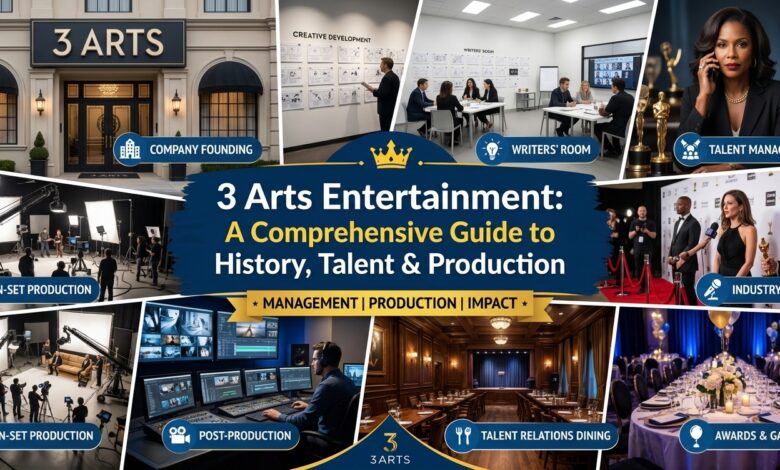
3 Arts Entertainment is a prominent entertainment management and production company with a long-standing connection to Hollywood’s film and television industries. Founded in 1991, the company has worked within an entertainment landscape that has changed dramatically over the past several decades. From traditional television and theatrical movies to streaming platforms and digital media, the industry has continuously evolved, creating new opportunities for creative professionals.
Entertainment companies are often recognized through the movies and television shows audiences watch, but much of the work behind those productions happens away from the screen. Talent managers, producers, writers, directors, actors, and other professionals all contribute to bringing entertainment projects to life. 3 Arts Entertainment represents an example of an organization operating within this important behind-the-scenes part of the industry.
What Is 3 Arts Entertainment?
3 Arts Entertainment is a talent management and production company established in 1991. Its activities have been connected with creative professionals and projects in the entertainment industry, particularly film and television.
Talent management is different from simply producing a movie or television series. A talent management company can work closely with creative professionals throughout their careers. This may include helping clients consider career opportunities, develop professional relationships, select projects, and build long-term strategies.
Production is another important part of the entertainment business. Producers and production companies help transform ideas and scripts into completed movies, television programs, and other forms of content. This requires cooperation between creative, financial, technical, and business teams.
The History of 3 Arts Entertainment
3 Arts Entertainment was founded in 1991, a period when the entertainment business was still heavily centered around traditional Hollywood studios, broadcast television, theatrical releases, and physical home entertainment.
The early 1990s were an important period for television and film. Cable television was expanding, home video was already an important source of revenue, and Hollywood studios were developing new ways to reach audiences.
Over the years, the industry experienced additional transformations. DVDs replaced VHS for many consumers, digital downloads became increasingly common, and eventually streaming services changed the way people watched movies and television.
Throughout these changes, entertainment professionals continued to need representation and career management. Companies such as 3 Arts Entertainment have operated within this constantly changing environment.
Talent Management at 3 Arts Entertainment
One of the most important areas associated with 3 Arts Entertainment is talent management. Creative professionals often face complex decisions when choosing projects and planning their careers.
A talent manager can provide professional guidance and help a client evaluate opportunities. Depending on the individual’s career, management may involve discussing potential projects, professional goals, relationships within the entertainment industry, and long-term career development.
Supporting Actors and Performers
Actors often have to decide which roles best fit their careers. Taking one project can influence the types of opportunities available later.
Talent management can help performers think beyond a single role. Instead of focusing only on immediate employment, managers can consider how different projects may contribute to a client’s long-term professional identity.
Supporting Writers and Directors
Writers and directors also operate in highly competitive industries. A writer may develop television scripts, feature-film screenplays, or other creative projects, while a director may work across different genres and formats.
Professional representation can help creative people navigate opportunities while allowing them to concentrate on their artistic work.
3 Arts Entertainment and Television
Television has played an important role in the modern entertainment industry, and its business model has changed substantially since the early 1990s.
For decades, broadcast networks dominated television. Viewers generally watched programs according to fixed schedules, while advertising represented a major source of revenue. Cable television later created additional channels and programming opportunities.
Today, television and streaming have become increasingly interconnected. Audiences can watch programs through traditional networks, cable channels, subscription services, advertising-supported platforms, and digital devices.
This transformation has created opportunities for writers, actors, directors, producers, and other professionals. It has also increased competition for attention as audiences have more entertainment choices than ever before.
3 Arts Entertainment and Film Production
Film production is another important part of the entertainment ecosystem. Creating a successful movie requires far more than hiring actors and operating cameras.
A typical production can involve development, screenplay work, financing, casting, location planning, filming, editing, sound design, visual effects, marketing, and distribution.
Production companies and producers help coordinate many of these activities. They may work with studios, distributors, filmmakers, financiers, and talent representatives.
For audiences, the final result is a movie on a cinema screen or streaming service. Behind that finished product is a complicated network of creative and business decisions.
The Role of Producers in Entertainment
Producers are often described as the people who help make entertainment projects happen. Their responsibilities can vary significantly depending on the type and size of a production.
A producer may participate in project development, help assemble creative teams, coordinate production activities, monitor budgets, and work with other companies involved in distribution.
In television, producers can have particularly important roles because a series may require the creation of multiple episodes or seasons. Maintaining creative consistency while meeting production schedules requires significant planning.
How Hollywood Has Changed Since 1991
The entertainment industry of 1991 looks very different from the entertainment industry of today.
At the beginning of the 1990s, people commonly watched movies in theaters, rented VHS tapes, purchased physical media, listened to CDs and cassettes, and watched scheduled television programs.
The arrival of DVDs provided better picture and sound quality and became an important home-entertainment format. Later, digital downloads and online video began changing consumer habits.
Streaming represented another major shift. Instead of purchasing or renting individual physical products, audiences could access large libraries of content through internet-connected devices.
Social media created another transformation. Celebrities and creative professionals can now communicate directly with audiences, promote projects, and develop personal brands without depending entirely on traditional media.
Why Talent Management Matters
The entertainment industry is highly competitive. Thousands of people work toward careers in acting, writing, directing, producing, and other creative fields.
Talent management can provide professional support in an environment where career decisions can have long-term consequences.
A manager may help a client identify suitable opportunities, understand industry expectations, develop relationships, and establish realistic professional goals.
Good management does not replace talent. Instead, it can help creative professionals make better use of their skills and opportunities.
3 Arts Entertainment and Popular Culture
Entertainment companies can have a major indirect influence on popular culture. Audiences usually remember the actors, characters, movies, and television programs they enjoy rather than the companies working behind them.
However, the organizations supporting creative professionals can influence which projects are developed and which talents receive opportunities.
Through talent management and production, entertainment companies participate in the broader process of creating stories and experiences that reach millions of viewers.
This connection between business and creativity is one of the most interesting aspects of the entertainment industry.
The Business Behind Movies and Television
Entertainment is both a creative industry and a major business. A movie or television series must often satisfy artistic goals while also operating within financial and commercial limitations.
Studios and production companies consider budgets, audience demand, distribution opportunities, marketing costs, and potential revenue.
Talent can also influence the commercial prospects of a project. Well-known actors, writers, directors, and producers may attract attention from audiences, studios, distributors, and investors.
This is why professional relationships and career management are important parts of Hollywood.
Opportunities for Creative Professionals
The entertainment industry offers many different career paths. Acting is one of the most visible, but it represents only one part of the business.
People can pursue careers in screenwriting, directing, producing, casting, cinematography, editing, production design, sound, visual effects, marketing, publicity, entertainment law, and talent management.
Digital entertainment has also created additional opportunities. Content creators, streaming specialists, social media professionals, and digital producers now participate in an industry that is much broader than traditional Hollywood.
For aspiring professionals, building skills, gaining experience, developing relationships, and maintaining professionalism can be as important as creative ability.
The Future of Entertainment
The entertainment business continues to evolve. Streaming, artificial intelligence, digital production tools, virtual production, social media, and changing audience habits are influencing how content is created and consumed.
Audiences increasingly expect entertainment to be available across multiple devices. A movie may be released in theaters and later become available through digital platforms, while television programs can reach international audiences almost immediately through streaming.
These developments are creating both challenges and opportunities for talent management and production companies.
Organizations with experience in the entertainment industry can play an important role in helping creative professionals adapt to these changes.
Frequently Asked Questions About 3 Arts Entertainment
1. What is 3 Arts Entertainment?
3 Arts Entertainment is an entertainment management and production company founded in 1991. It operates within the film and television industry and has been associated with creative talent and entertainment projects.
2. When was 3 Arts Entertainment founded?
3 Arts Entertainment was founded in 1991. Since then, it has operated through major changes in Hollywood, television, home entertainment, digital media, and streaming.
3. What does 3 Arts Entertainment do?
3 Arts Entertainment is associated with talent management and production. Talent management involves supporting creative professionals with career development and professional opportunities, while production involves helping develop and create entertainment projects.
4. Is 3 Arts Entertainment a talent management company?
Yes. Talent management is a significant part of the company’s role within the entertainment industry. Managers can help creative professionals make career decisions, evaluate opportunities, and plan their professional development.
5. Does 3 Arts Entertainment work with television projects?
3 Arts Entertainment operates within the television and broader entertainment environment. Television has become an increasingly diverse industry involving broadcast networks, cable companies, digital platforms, and streaming services.
6. Does 3 Arts Entertainment work in film?
The company is involved in the broader film and television production environment. Film projects generally involve many different professionals and organizations, including producers, studios, distributors, filmmakers, and talent representatives.
7. Why is talent management important in Hollywood?
Talent management can help actors, writers, directors, producers, and other creative professionals navigate a competitive industry. Professional guidance can assist with project choices, career planning, relationships, and long-term development.
8. How has the entertainment industry changed since 1991?
The industry has moved from a primarily theater, broadcast television, VHS, and physical-media environment toward a digital ecosystem dominated by streaming, online platforms, social media, and on-demand viewing. These changes have created new ways for entertainment to reach audiences.
Conclusion
3 Arts Entertainment represents an important part of the business infrastructure behind modern film and television. Founded in 1991, the company has operated during a period of extraordinary change in Hollywood and the wider entertainment industry.
From traditional television and theatrical movies to streaming platforms and digital media, the ways audiences consume entertainment have changed dramatically. Yet the need for talented actors, writers, directors, producers, and other creative professionals remains constant.
Talent management and production companies help connect creative people with opportunities while supporting the complex business processes behind entertainment projects. As technology continues to transform the industry, organizations such as 3 Arts Entertainment remain part of the larger ecosystem that helps turn creative ideas into entertainment enjoyed by audiences around the world.